
30+
Años de experiencia
160M+
SMS procesados
99%+
Tasa de entrega
24/7
Soporte técnico
Empresas que confían en Grupo Tecnophone












Por qué las empresas eligen Grupo Tecnophone
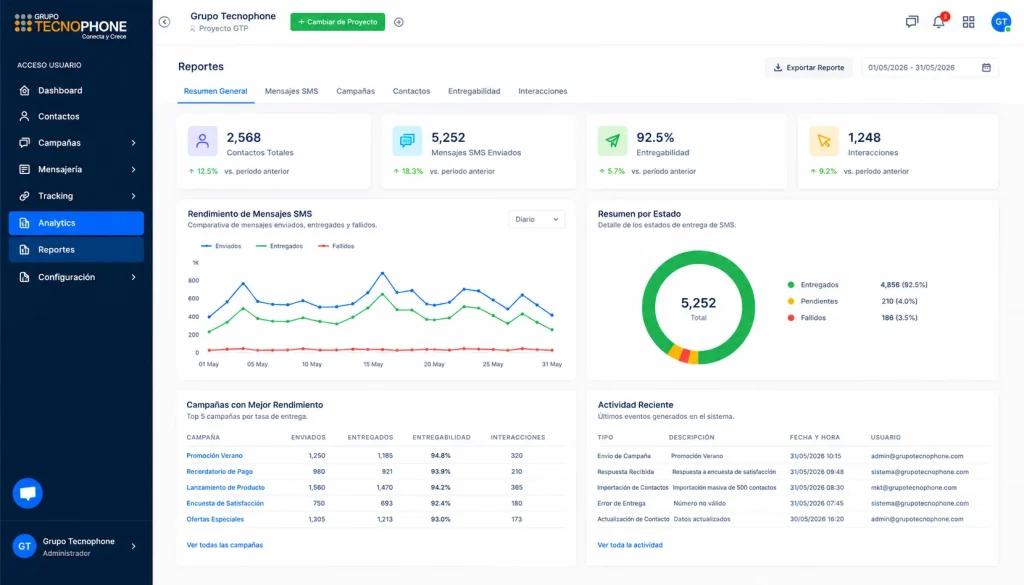
Funciones pensadas para que cada SMS llegue a tiempo, cueste lo justo y quede registrado.
Validación contra el PNN
Verificamos cada número contra el Plan Nacional de Numeración para saber si es fijo o móvil y evitarle costos en envíos que no van a llegar.
Codificación a su elección
Usted elige GSM7 o Unicode. En GSM7 reemplazamos automáticamente los caracteres no admitidos para que el mensaje no se divida ni cueste de más.
Remitente con el nombre de su marca
Envíe con remitente alfanumérico para que sus clientes reconozcan el mensaje a primera vista y confíen en él.
SMS bidireccional
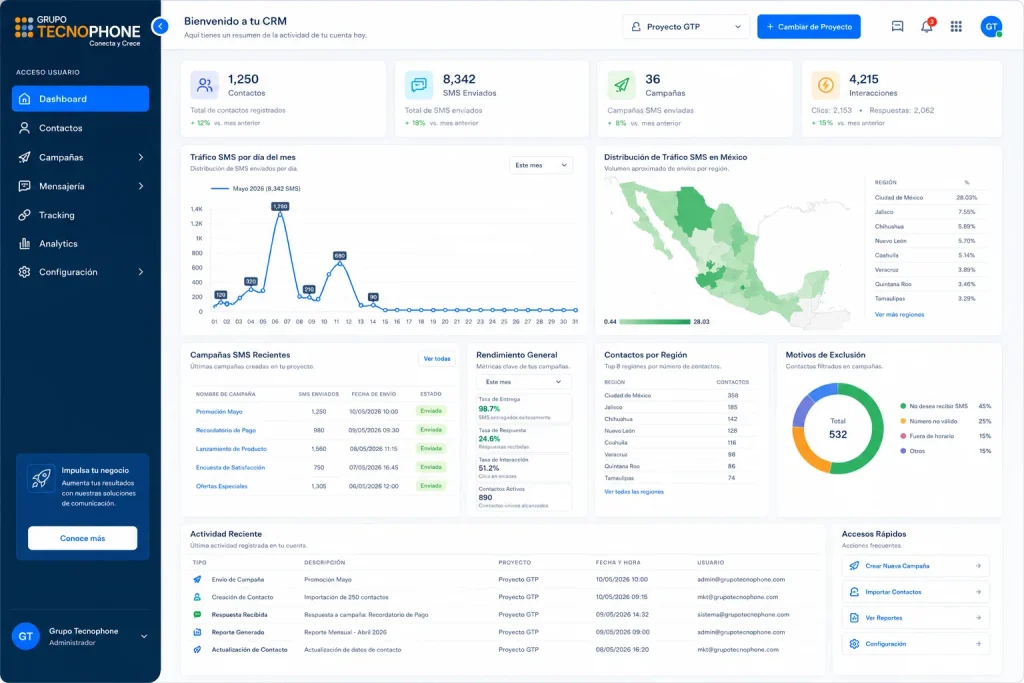
Reciba las respuestas de sus clientes en tiempo real por webhook para confirmaciones, encuestas y atención.
Listas negras
Excluya automáticamente los números que pidieron no recibir mensajes y proteja la reputación de su marca.
SMS Flash y enlaces de seguimiento
Mensajes que aparecen directo en la pantalla para alertas urgentes y enlaces cortos que miden cada clic.
Soluciones por industria
Casos de uso listos para operar en los sectores donde el SMS es un canal crítico.
Banca y finanzas
Códigos OTP, alertas de movimientos y avisos de seguridad con entrega y trazabilidad en tiempo real.
Cobranza
Recordatorios de pago por etapa, avisos de vencimiento y mensajes que reducen la mora sin saturar al cliente.
eCommerce y retail
Confirmación de pedidos, avisos de envío, recuperación de carritos y promociones segmentadas.
Logística y última milla
Avisos de entrega, ventanas de visita y confirmación de recepción para reducir visitas fallidas.
Seguros
Renovaciones de póliza, avisos de pago y seguimiento de siniestros con mensajes claros y oportunos.
Salud y servicios con cita
Recordatorios y confirmación de citas médicas, dentales y de laboratorio para bajar las inasistencias.
Cómo se cobra
Un esquema simple y transparente: usted elige cómo pagar y solo paga por los mensajes que envía.
Prepago
Adquiera un saldo de mensajes y úselo al ritmo de su operación, sin plazos forzosos.
Pospago con factura mensual
Envíe durante el mes y reciba una sola factura con el detalle de lo que consumió.
Tarifas por volumen
Si su operación envía grandes cantidades, cotizamos tarifas por rango de volumen.
Sin costos ocultos
Se cobra cada mensaje enviado. El cifrado, los webhooks y los reportes de entrega no tienen costo adicional.
¿Quiere estimar su gasto? Vea cuánto cuesta enviar SMS masivos en México.
Cómo empezar en 3 pasos
Del primer contacto a su primer envío, con acompañamiento de nuestro equipo en cada etapa.
Platiquemos su caso
Revisamos su volumen, el tipo de mensajes y sus sistemas para definir el esquema de integración ideal.
Integre a su manera
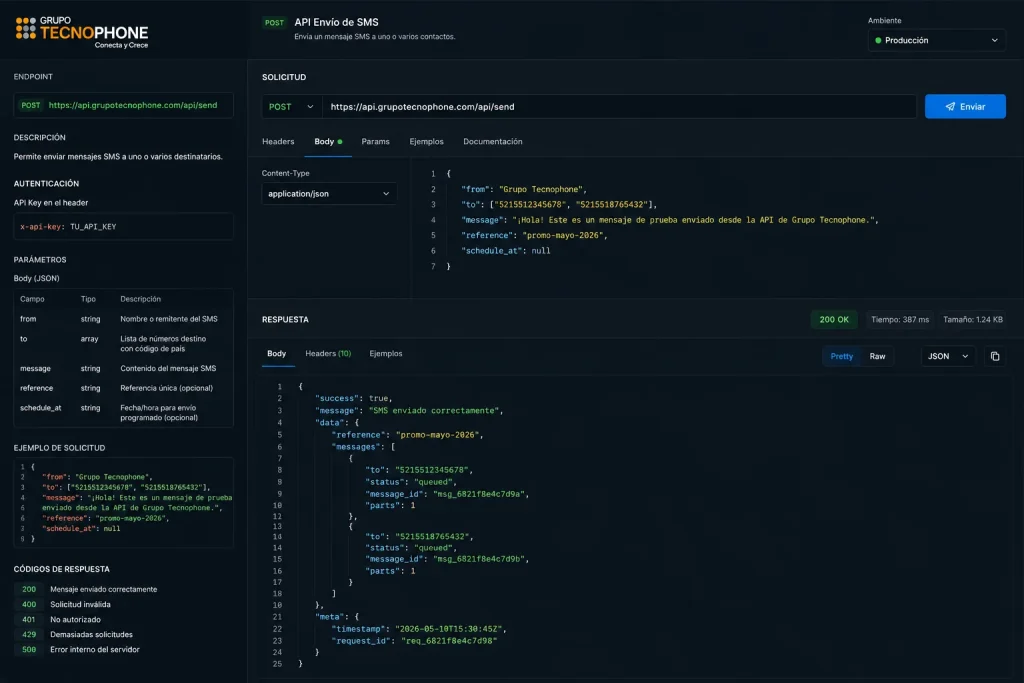
Conecte su sistema por API REST o SMPP, o use el panel web sin programar. Le acompañamos en la integración.
Envíe y mida
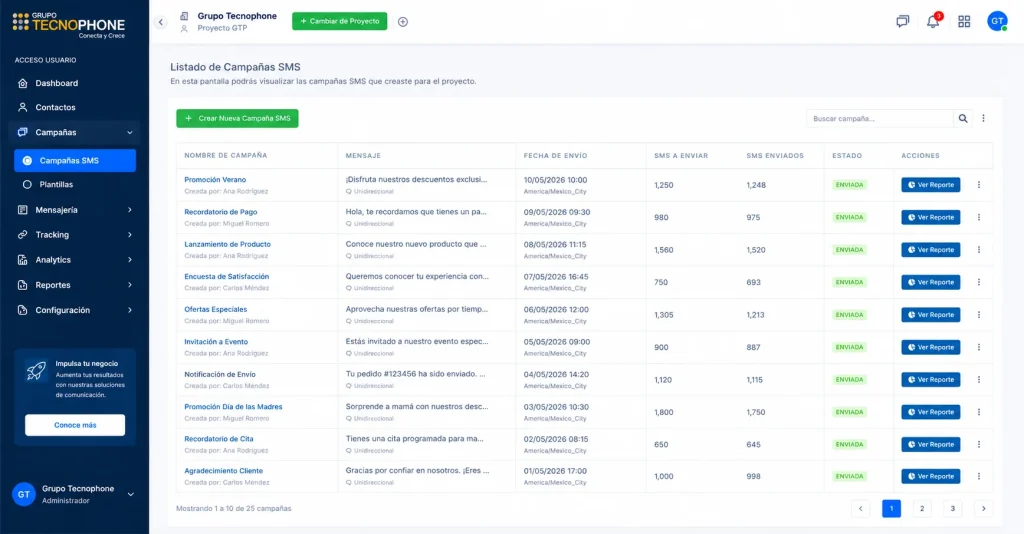
Active sus envíos y vea en tiempo real entregas, respuestas y errores desde los reportes de la plataforma.