
Mexico’s Telecommunications Regulatory Commission (Comisión Reguladora de Telecomunicaciones, CRT) is preparing rules against unsolicited calls and messages, which it plans to put out for public consultation. What is known about the draft points to more traceability across the A2P SMS chain, network-level filters and opt-out mechanisms for users. Here is what to prepare now.
This article summarizes what has been reported about the draft. We will update it with the text the CRT puts out for public consultation.
What is known about the draft
According to reports published in August and September 2026, the CRT’s draft includes, among other measures:
- Carriers identifying anomalous SMS traffic, blocking unauthorized senders and offering filtering tools to their users.
- Carriers providing information on the companies that contract bulk SMS campaigns, so the origin of each message can be traced.
- Separate numbering ranges for SMS: numbers starting with 60 for advertising and with 30 for transactional messages.
- Ways for users to opt out by replying with words such as “ALTO” (STOP), and carriers blocking advertising within 24 hours when a user rejects it.
- A stronger REPEP, the public do-not-contact registry run by Profeco, Mexico’s consumer protection agency.
India’s model, where commercial senders are registered and non-compliant traffic is blocked on the network, has been cited as a reference. Timelines, penalties and who each obligation applies to will be known once the draft is published.
Why it matters even if your messages are legitimate
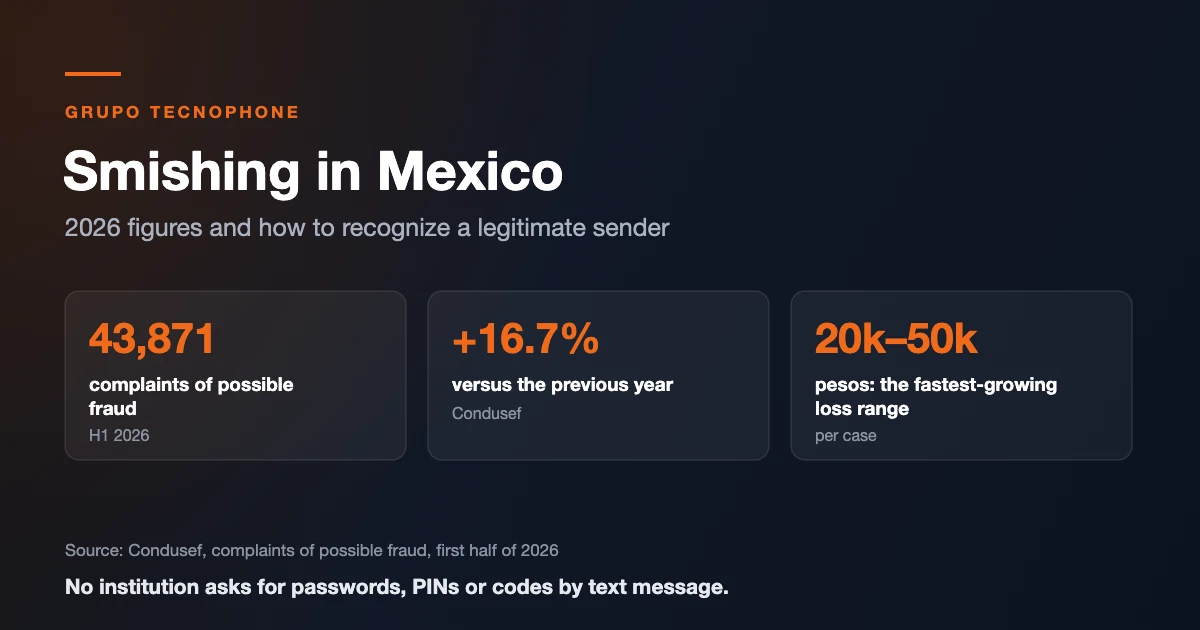
The goal is to curb fraud: according to figures cited by the CRT, 5.4 million people in Mexico fall victim to phone fraud through messages and calls every year. But a filter based on volume or traffic patterns cannot tell intentions apart. Banks and fintechs have already warned that a poorly calibrated filter could block OTP codes, payment reminders or collection notices, channels a large part of their operations depend on.
If the split between advertising and transactional traffic goes ahead, classifying each message will no longer be an internal marketing decision; it will have consequences on the network. It is a good time to review the difference between transactional and promotional SMS.
What to prepare now
- Sender inventory: which sender each team uses, for what type of message, and who approves it. A consistent sender is easier to register and to recognize.
- Separate traffic: authentication and transactional alerts in flows distinct from campaigns, each with its own configuration.
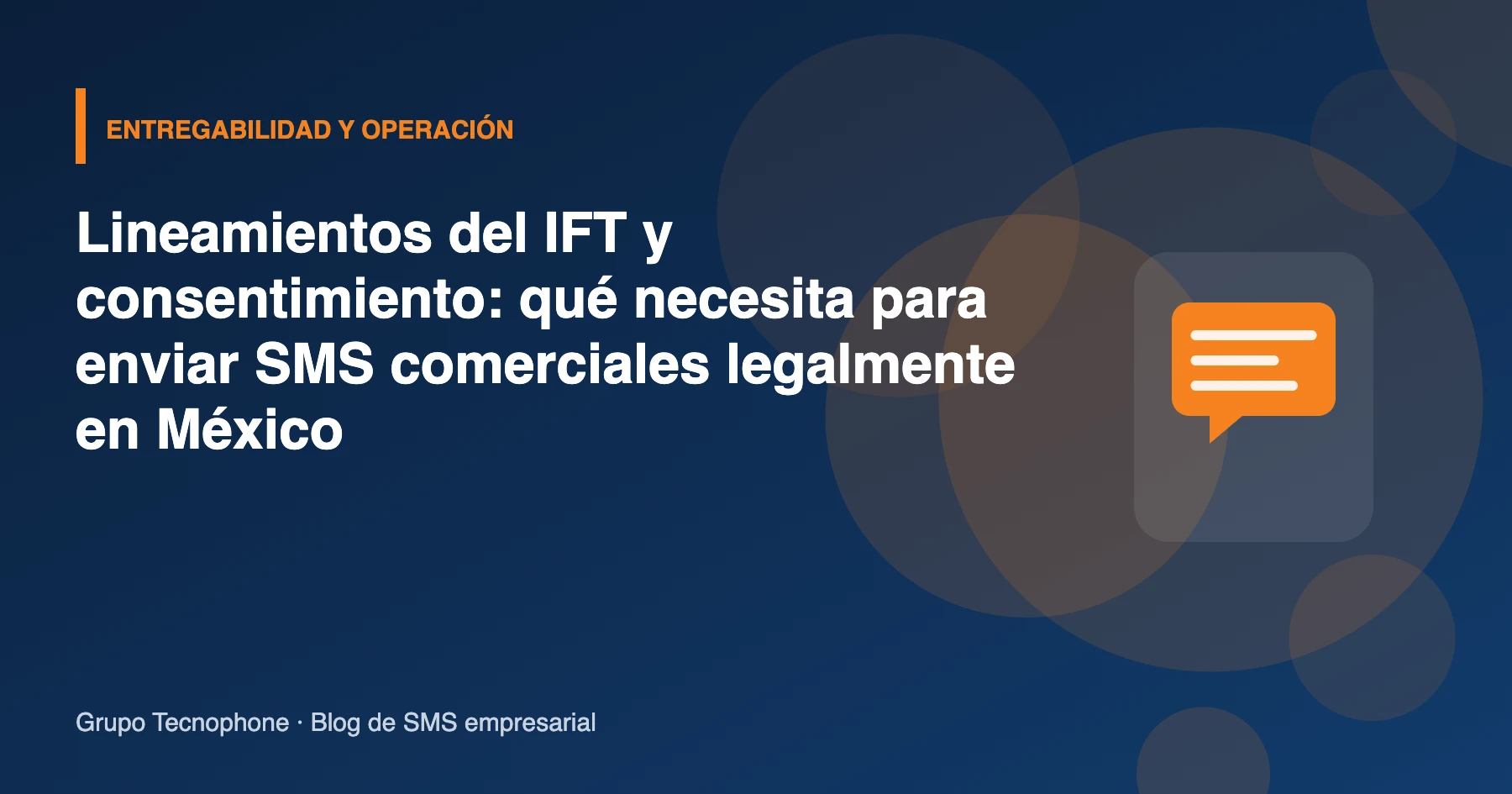
- Proof of consent: for campaigns, keep a record of when and how each customer agreed to receive messages. Review the current rules for commercial SMS and consent.
- A working opt-out: if you send promotions, offer a simple way to unsubscribe now and honor it across all your databases.
- Clean content: no generic URL shorteners and no requests for codes or personal data, which are exactly the signals filters look for.
- Delivery monitoring: a sudden drop in deliveries on one carrier may be the first sign of a filter. Check your delivery reports daily.
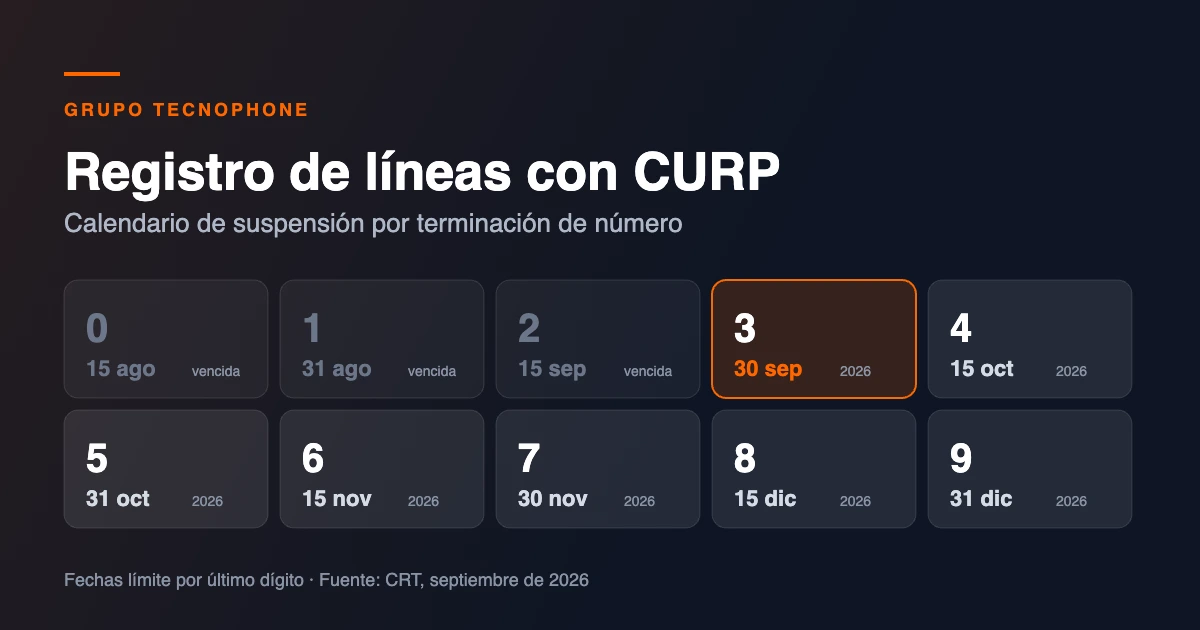
All of this comes on top of Mexico’s CURP phone registration, which is already taking millions of lines out of service at each deadline.
How to take part in the consultation
Once the CRT publishes the draft, any company will be able to submit comments through its public consultation portal. If your operation relies on SMS for authentication or collections, document with data what would happen to your flows if they were blocked, and take part.
See also: How to choose an SMS provider in Mexico: 12 questions to ask before signing
Sources
- Hugo González, “La CRT contra el Spam”, El Tiempo de Monclova, August 25, 2026 (in Spanish). Read article
- José Yuste, “CRT contra spam y por ventanilla única; Bait: son 10 millones de líneas”, Excélsior, August 25, 2026 (in Spanish). Read column
- “En puerta, la cacería de los creadores de Spam para celulares”, La Crónica de Hoy, August 26, 2026 (in Spanish). Read article
- “Créditos más caros: bancos y fintech bajo presión por reglas antispam, líneas suspendidas y WhatsApp”, El CEO, September 9, 2026 (in Spanish). Read article
- Telecommunications Regulatory Commission (CRT), public consultations portal. portal.crt.gob.mx
Frequently asked questions
Are the rules already in force?
No. The draft has not yet been put out for public consultation. After the consultation, the CRT reviews the comments, its board approves the final version, and it is published in the Diario Oficial de la Federación (Mexico’s official gazette).
Will bulk SMS be blocked?
What is known points to blocking unauthorized senders and anomalous traffic, not enterprise SMS in general. The exact scope will depend on the final text.
What happens to OTP codes?
OTPs are transactional traffic. If separate ranges are created, they would be expected to be treated differently from advertising, but this will need to be confirmed in the draft.
Need an enterprise SMS platform?
Grupo Tecnophone provides enterprise SMS messaging in Mexico, an API with sandbox and encryption, per-message delivery reports and a console for campaigns. Talk to an expert or read the developer documentation.